Demand generation
/
feb 16, 2025
Demand generation KPIs and metrics - Measuring success in lead generation
Learn how to track, implement, and optimize the most important KPIs and metrics in B2B demand generation to drive revenue, not just leads. This guide breaks down the full funnel, from MQLs to CAC, and shows you how to turn data into actionable insights.
/
Enjoy reading!
Understanding and effectively tracking demand generation KPIs and metrics is important for B2B marketers, particularly in tech and SaaS, who want to optimize lead generation strategies and drive growth. This article explores the most important indicators, offers useful implementation steps, and shares practical tips for turning data into revenue-driving insights.
Understanding demand generation KPIs and metrics
Demand generation KPIs and metrics help marketers evaluate whether their activities are creating pipeline and revenue, not just clicks and impressions. By tracking the right indicators across the buyer’s journey, B2B teams can:
Identify which campaigns bring qualified leads.
Spot bottlenecks in the funnel.
Optimize marketing spend and channel mix.
Prove marketing’s impact on revenue.
Core KPIs to know upfront:
Marketing Qualified Leads (MQLs)
Sales Qualified Leads (SQLs)
Cost per Lead (CPL)
Customer Acquisition Cost (CAC)
Conversion Rates across the funnel
These KPIs enable marketers to evaluate the efficiency of their lead generation strategy efforts and the quality of leads passed to sales teams to support the overall go-to-market strategy.
Supporting metrics like website engagement, pipeline velocity, or content performance complete the picture and help marketers understand why certain KPIs move up or down.

By concentrating on these KPIs and metrics, B2B marketers can gain insights into their marketing performance and make data-informed decisions to refine strategies and ultimately drive revenue growth. Aligning chosen metrics with overall business goals and tailoring them to specific business models and target audiences is important.
Key KPIs for lead generation
Tracking the appropriate key performance indicators (KPIs) is essential for gauging the success of lead generation efforts and refining the demand generation approach. Several critical KPIs warrant close monitoring to ensure that lead generation activities are contributing effectively to business objectives:
Marketing Qualified Leads (MQLs)
Prospects who show buying intent by engaging with marketing (downloads, webinar registrations, trial sign-ups). In SaaS, MQL definitions should evolve as product maturity grows, e.g., early-stage startups may count free trial sign-ups, while later-stage SaaS companies may require product usage milestones.Sales Qualified Leads (SQLs)
MQLs vetted by sales as real buying opportunities. The MQL → SQL conversion rate is a critical alignment metric between marketing and sales. For B2B SaaS, healthy rates average 10–20%.Cost Per Lead (CPL)
Total marketing spend ÷ number of leads. CPL helps compare channels (paid search vs. organic content, webinars vs. events). A lower CPL is not always better; what matters is whether low-cost leads become paying customers.Customer Acquisition Cost (CAC)
Total marketing + sales costs ÷ new customers. In SaaS, CAC is often compared to Customer Lifetime Value (CLV); a sustainable model usually keeps CLV at least 3x higher than CAC.Conversion Rates
Track conversions across stages:Visitor → Lead
Lead → MQL
MQL → SQL
SQL → Customer
These reveal bottlenecks (e.g., high traffic but poor MQL conversion = weak lead capture strategy).
Time to Conversion
Measures how long leads take to become customers. A shorter cycle usually means stronger targeting and nurturing. For enterprise SaaS, cycles often stretch 6-12 months; tracking this ensures realistic expectations.
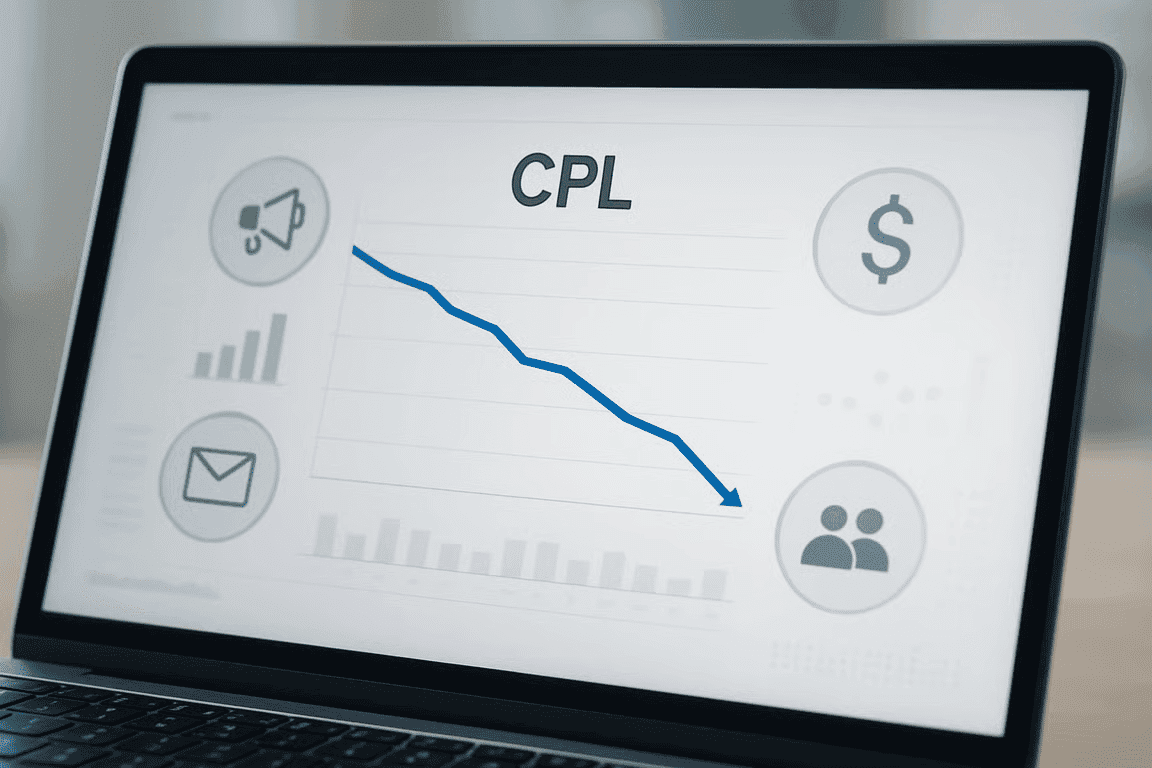
By consistently tracking these lead generation KPIs, you get a clearer picture of what's working, what's wasting budget, and where to focus next. You should review them regularly, because what matters at month three looks different at month twelve.
The difference between lead generation KPIs and demand generation metrics
Most teams track lead generation KPIs and demand generation metrics as if they are the same thing, but they aren't. Lead generation KPIs measure what happened at the bottom of the funnel. MQLs, SQLs, CPL, CAC. These numbers tell you how many people raised their hands and what it cost to get them there.
Demand generation metrics measure what happened before that, like website traffic from target accounts, content consumption rates, email engagement, and social reach. These numbers tell you whether your market is warming up to you before anyone fills out a form.
The problem is that most B2B teams only track lead generation KPIs because those are the numbers salespeople ask for. They ignore demand generation metrics entirely until the pipeline dries up, and then, it is too late to course-correct quickly.
You should track both. Lead generation KPIs tell you what is happening now. Demand generation metrics tell you what is coming in 90 days.
Important demand generation metrics to track
Beyond KPIs, a broader set of demand generation metrics provides context. These aren’t always “board-level” numbers, but they reveal where campaigns succeed or fail.
Pipeline Velocity – How quickly opportunities move through the pipeline:
(Opportunities × Win Rate × Average Deal Size) ÷ Sales Cycle Length
→ SaaS example: if you double velocity, you double revenue impact without increasing spend.Content Performance – Which assets drive leads:
Downloads/views of ebooks or webinars
Engagement (time on page, shares)
Content → MQL conversion rates
Website Traffic & Engagement – Unique visitors, time on site, bounce rate, pages per session. These show if demand gen is attracting the right audience.
Channel Effectiveness – Which channels drive revenue, not just leads. Paid ads may drive CPL down, but organic and partner campaigns may create higher CLV.
ROI (Return on Investment) – The ultimate metric: revenue generated ÷ marketing spend.
By consistently tracking these metrics, marketers can gain insights into performance and make data-driven decisions to refine strategies and drive revenue growth. Establishing benchmarks for industry and company size is important to effectively gauge performance over time and identify areas for improvement. A well-defined data-driven digital marketing strategy can significantly enhance these efforts.
Analyzing the demand generation funnel
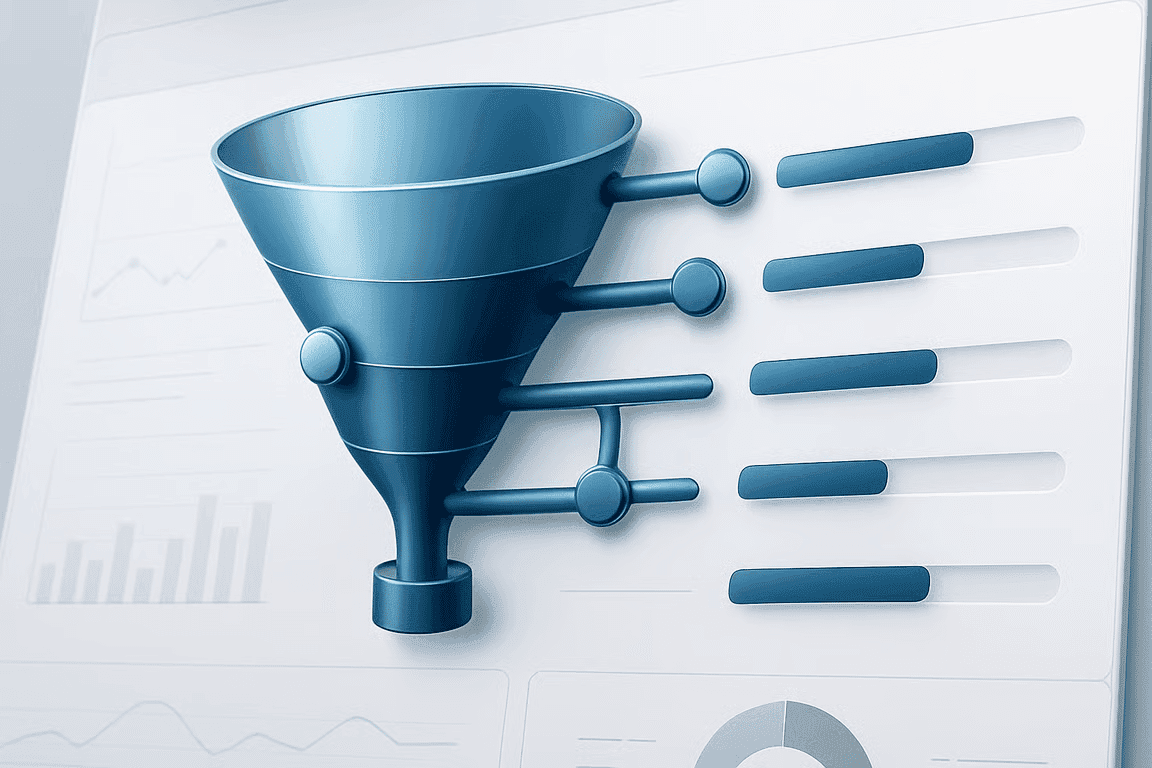
Understanding and refining the demand generation funnel is the key to maximizing the effectiveness of marketing efforts. By analyzing key metrics at each stage, bottlenecks can be identified, strategies refined, and overall conversion rates improved. A well-optimized funnel ensures that potential customers move smoothly from awareness to purchase.
Top of the Funnel: Awareness
At the awareness stage, the focus is on metrics that indicate how well potential customers are being attracted:
Website traffic and unique visitors
Social media engagement rates
Content views and shares
These metrics help gauge the reach and impact of brand awareness campaigns and provide insights into the effectiveness of different marketing channels in attracting potential customers.
Middle of the Funnel: Consideration
As prospects move into the consideration stage, metrics that show engagement and interest are tracked:
Email open and click-through rates
Webinar or event attendance
Content downloads
Time spent on site
These indicators help assess how effectively leads are being nurtured and moved closer to a purchase decision. Analyzing these metrics allows marketers to refine their nurturing strategies and provide more relevant content to potential customers.
Bottom of the Funnel: Decision
At the decision stage, the focus shifts to conversion-oriented metrics:
Demo or trial requests
Sales qualified leads (SQLs)
Opportunity-to-close ratio
Average deal size
These metrics provide insights into the ability to convert interested prospects into customers and highlight areas where the sales process can be optimized to improve conversion rates.
Analyzing funnel performance
To gain a full understanding of the demand generation funnel, consider these key performance indicators:
Conversion rates between funnel stages
Time to conversion
Cost per lead at each stage
Customer acquisition cost (CAC)
Customer lifetime value (CLV)
Regularly analyzing these metrics allows for the identification of areas for improvement and helps make decisions based on data to refine marketing strategies. This approach allows for fine-tuning each stage of the funnel, ensuring a smooth and efficient journey from awareness to conversion.
Implementing KPIs and metrics in your demand generation strategy
To effectively measure and refine demand generation efforts, implementing the right KPIs and metrics throughout the strategy is important. Several key steps can help successfully integrate these elements into the marketing approach, ensuring that data drives decision-making and optimizes performance.
1. Align metrics with business objectives. Begin by identifying overall business goals and aligning demand generationmetrics accordingly. This ensures that measurements directly contribute to the company's success. For example, if the goal is revenue growth, focus on metrics like pipeline velocity and customer lifetime value.
2. Establish a balanced scorecard. Create a complete set of KPIs that cover different aspects of the demand generationfunnel. This includes top-of-funnel metrics like website traffic and content performance, middle-of-funnel metrics like lead-to-MQL conversion rate, and bottom-of-funnel metrics like sales qualified leads and opportunity-to-win ratio.
3. Implement good tracking and attribution. Use analytics tools to track and attribute results across channels and touchpoints. This may include marketing automation platforms, CRM systems, web analytics, and multi-touch attribution models to understand the full customer journey.
4. Set benchmarks and targets. Establish baseline performance metrics and set realistic targets for improvement. Consider historical data from past campaigns, industry benchmarks relevant to the sector, and competitive analysis to understand market standards.
5. Regular reporting and analysis. Establish a schedule for reviewing demand generation KPIs and metrics, including daily monitoring of real-time campaign performance, weekly analysis of key funnel metrics, monthly review of overall performance, and quarterly assessment of long-term trends.
6. Continuous optimization. Use the insights you have to refine the strategy. This may include A/B testing campaign elements, reallocating budget to high-performing channels, refining targeting based on audience engagement data, and optimizing content strategy based on performance metrics.
7. Cross-functional collaboration. Build collaboration between marketing, sales, and customer success teams to ensure a full approach to demand generation. Share KPI dashboards across departments, align on definitions of qualified leads and opportunities, and conduct regular meetings to discuss performance and strategies.
By implementing these steps, a data-driven demand generation strategy can be created that effectively measures success, identifies areas for improvement, and drives business growth. Regularly reassessing KPIs and metrics to ensure they remain aligned with evolving business objectives and market conditions is important.
Optimizing performance with demand generation benchmarks
To maximize the effectiveness of demand generation efforts, establishing and tracking relevant benchmarks is key. These benchmarks provide a framework for measuring success and identifying areas for improvement, allowing marketers to make data-driven decisions and optimize their strategies.
Establishing baseline performance: Before setting benchmarks, analyze historical data to establish baseline performance metrics for key KPIs such as conversion rates at each funnel stage, cost per lead (CPL), customer acquisition cost (CAC), marketing qualified lead (MQL) to sales qualified lead (SQL) ratio, and average deal size and sales cycle length.
Industry-specific benchmarks: Research industry-specific benchmarks to gain context for performance. Key metrics to compare include average website conversion rates, email open and click-through rates, social media engagement metrics, and webinar attendance and conversion rates.
Setting realistic targets: Use baseline data and industry benchmarks to set realistic improvement targets. Consider factors such as company growth stage and market position, available resources and budget, the competitive landscape, and seasonal fluctuations in demand.
Continuous optimization: Regularly review performance against established benchmarks to identify areas for improvement. Key strategies include A/B testing landing pages and email campaigns, refining lead scoring models, optimizing content for different funnel stages, and improving sales and marketing alignment.
Using technology: Utilize marketing automation and analytics tools to track and analyze KPIs more effectively. These tools can help automate data collection and reporting, identify trends and patterns, generate useful insights, and attribute revenue to specific marketing activities.
By consistently measuring performance against established benchmarks, data-driven decisions can be made to improve marketing efficiency and drive better results. Benchmarks should be used as guidelines rather than strict rules, and the unique business context should always be considered when interpreting and acting on benchmark data.
Driving success with demand generation KPIs and metrics
The most successful demand gen teams don’t just track numbers, but they act on them. To maximize results:
Focus on the 2-3 KPIs most tied to revenue (often SQLs, CAC, pipeline velocity).
Benchmark against industry standards, but prioritize your own growth trajectory.
Use attribution and dashboards to connect marketing investment to revenue outcomes.
Building alignment across sales and marketing means shared KPIs mean shared accountability.
The takeaway: KPIs are not just reporting tools, but growth levers. By focusing on the right mix of funnel-wide metrics, B2B marketers can build predictable, scalable demand engines.
Frequently Asked Questions (FAQ)
1. What is the difference between a KPI and a metric in demand generation?
KPIs (Key Performance Indicators) are the most important measurements that directly reflect the success of your demand generation strategy in achieving business objectives. Metrics are supporting data points that provide additional context and insight but may not be as critical as KPIs. For example, Marketing Qualified Leads (MQLs) might be a KPI, while website page views are a metric that supports understanding of MQL growth.
2. How often should demand generation KPIs and metrics be reviewed?
The frequency depends on your campaign cycles and business needs. Real-time or daily monitoring is recommended for active campaigns, with weekly and monthly reviews for trend analysis and strategy refinement. Quarterly assessments help track long-term progress and align with business goals.
3. What tools can help track demand generation KPIs and metrics?
Common tools include marketing automation platforms (like HubSpot or Marketo), CRM systems (such as Salesforce), web analytics tools (like Google Analytics), and business intelligence dashboards. These tools help collect, visualize, and analyze data across the entire funnel.
4. Which KPIs should I prioritize for B2B lead generation?
Focus on KPIs that most closely align with revenue and growth goals, such as Marketing Qualified Leads (MQLs), Sales Qualified Leads (SQLs), Cost Per Lead (CPL), Customer Acquisition Cost (CAC), and conversion rates at each funnel stage.
5. How do I set realistic benchmarks for my demand generation metrics?
Start by analyzing your historical performance data to establish baselines. Compare these with industry benchmarks and competitors where possible. Adjust targets based on your company’s growth stage, resources, and market conditions.
6. Why is cross-functional collaboration important in demand generation measurement?
Collaboration between marketing, sales, and customer success ensures alignment on lead definitions, campaign goals, and performance evaluation. This full approach improves lead quality, conversion rates, and overall business outcomes.
7. How can I improve my demand generation KPIs over time?
Regularly analyze performance data, conduct A/B tests, refine your content and targeting strategies, and optimize your funnel based on insights. Continuous improvement and adaptation to market changes are key to driving better results.
Further Reading
/
BLOG